
Business Ecommerce Guide: Unlock Success in 2026
Business ecommerce is changing faster than ever as we move toward 2026. New technology and shifting buyer behaviour are rewriting the rules for online success.
For those ready to adapt, the next few years offer big opportunities for growth and efficiency. This guide is designed to help you get ahead.
Inside, you’ll find proven strategies, expert insights, and step-by-step actions. Learn how to choose the right business model, set up and optimise your store, master marketing, streamline operations, and prepare for the future.
Get ready to future-proof your business with practical advice and real-world examples.
The State of Ecommerce in 2026: Trends & Opportunities
As we approach 2026, the business ecommerce landscape is breaking new ground across Australia and the globe. The ecommerce market is set to reach nearly $8 trillion worldwide by 2027. Locally, Australian online retail sales are expected to surpass $60 billion in 2025, showing persistent double-digit growth. Mobile commerce and social platforms are the main engines of new customer acquisition. For a deeper dive into local growth and projections, see Australia's eCommerce Market Growth.

The State of Ecommerce in 2026: Trends & Opportunities
Global and Australian Ecommerce Market Overview
Business ecommerce is experiencing record growth, driven by both global and local trends. In Australia, ecommerce now accounts for a significant share of total retail, with more brands entering the online space every year. The rise of mobile commerce and the integration of social shopping on platforms like Instagram and TikTok are reshaping how businesses reach customers. This rapid expansion is creating new opportunities for entrepreneurs and established players alike.
Key Consumer Behaviour Shifts
Australian shoppers are demanding more from business ecommerce brands. Customers expect seamless omnichannel experiences, whether shopping online, via mobile, or in-store. The emphasis on sustainability, ethical sourcing, and transparency is influencing purchasing decisions at every level. Personalised experiences, powered by AI-driven recommendations, are now a baseline expectation. Brands that adapt to these shifts foster stronger loyalty and repeat business.
Omnichannel shopping
Sustainability focus
Personalised journeys
Consumers are quick to switch to brands that align with their values and offer convenience.
Technology Innovations Transforming Ecommerce
Technology is transforming business ecommerce operations and customer experiences. Artificial intelligence is now standard for product recommendations, chatbots, and predictive analytics. Augmented reality (AR) and virtual try-ons are making online shopping interactive, reducing hesitation and returns. Automation in logistics, from smart warehouses to faster last-mile delivery, is raising the bar for speed and reliability. Businesses investing in these tools are outpacing slower adopters.
Emerging Business Models
Business ecommerce is no longer limited to traditional retail. Subscription commerce, direct-to-consumer (D2C) brands, and B2B ecommerce are all expanding rapidly. Dropshipping and print-on-demand models offer low-barrier entry for new players. Marketplace selling on giants like Amazon and eBay, as well as niche sites, is opening doors to global audiences. Each model comes with its own strengths, risks, and operational needs.
Subscription boxes
D2C brands
Dropshipping
Marketplaces
Choosing the right approach depends on your goals, resources, and target market.
Competitive Landscape & Barriers to Entry
Competition in business ecommerce is fierce, with both global and local brands vying for attention. While startup costs are lower than ever, customer expectations for experience and trust are higher. Regulatory changes, data privacy, and cybersecurity are front of mind for every operator. Building credibility and protecting customer data are non-negotiable. Staying compliant with evolving regulations is crucial to long-term success.
Data-Driven Insights
Over 70% of Australian consumers now shop online at least monthly, according to Shopify. Despite this, average ecommerce conversion rates sit between 1.5 and 3 percent, leaving plenty of room for optimisation. Data-driven decision-making is more important than ever. Using analytics to track behaviour, refine marketing, and improve operations separates thriving businesses from those falling behind.
Examples & Case Studies
Leading business ecommerce brands are setting new standards. The Iconic has leveraged omnichannel strategies and a strong sustainability focus to capture a loyal customer base. Koala, known for its eco-friendly products, has built trust through transparency and local fulfilment. Small businesses are finding success by using social commerce on Instagram and TikTok, reaching new audiences with creative content and authentic engagement. These examples show that innovation, agility, and customer focus are key to thriving in 2026.
Step-by-Step: Building Your Ecommerce Business in 2026
Building a business ecommerce store in 2026 is both exciting and challenging. The process has evolved, but the fundamentals remain: choose the right niche, plan smart, and stay agile. Let’s break down each step so you can move from idea to launch with confidence.

Step-by-Step: Building Your Ecommerce Business in 2026
Step 1: Identifying Your Niche & Product Opportunities
Success in business ecommerce starts with a clear niche. Use tools like Google Trends and Shopify’s product research to spot gaps in the market.
Validate your ideas by checking keyword search volume, analysing competitors, and gathering feedback from potential customers. Look for rising categories such as health, eco-friendly goods, or digital products.
Ask yourself: Who are you solving a problem for? What makes your product different? This groundwork ensures your business ecommerce venture is built on real demand, not just gut feeling.
Step 2: Business Planning & Competitive Research
Every business ecommerce journey needs a solid roadmap. Start with a business plan that outlines your goals, value proposition, and financial forecasts.
Dive into SWOT analysis to pinpoint your strengths and threats. Study competitors to see what works and where you can stand out. Don’t overlook the numbers—budgeting is crucial.
If you’re unsure about costs, check out this detailed guide on ecommerce website costs Australia 2025 to get realistic figures for setup and ongoing expenses. A clear plan now saves headaches later.
Step 3: Choosing Your Ecommerce Platform
Selecting the right platform sets the foundation for your business ecommerce store. Evaluate options like Shopify, WooCommerce, BigCommerce, and Magento.
Think about scalability, ease of use, and integration with local payment and shipping providers. Shopify is popular among Australian SMEs for its strong support and local features.
Compare plans, support options, and third-party app ecosystems. The right choice aligns with your business ecommerce goals and growth plans.
Step 4: Branding & Domain Setup
Your brand is your promise. Choose a memorable name that’s available as a domain. Register your domain early to secure your online presence.
Design a logo and visual identity that reflect your values and appeal to your target audience. Free logo tools can help you get started, or you can invest in custom design for a unique edge.
Consistency in branding builds trust and recognition. A strong brand foundation helps your business ecommerce site stand out in a crowded market.
Step 5: Store Design & Development
Your online store is the digital face of your business ecommerce brand. Focus on a clean, mobile-optimised design with simple navigation.
Use high-quality product images and persuasive, benefit-driven copy. Ensure your site loads quickly and is accessible to everyone, including those using assistive technologies.
Test the user journey—can shoppers find what they need in just a few clicks? Small tweaks in design can make a big difference in conversion rates.
Step 6: Product Sourcing & Fulfilment Strategies
Decide how you’ll source products for your business ecommerce store. Options include working with local suppliers, global manufacturers, or using dropshipping to minimise upfront costs.
Compare fulfilment methods: self-fulfilment gives you control, third-party logistics saves time, and marketplace fulfilment (like FBA) can speed up delivery.
Factor in shipping times and costs. Australian customers expect fast and transparent delivery, so set clear expectations to build trust.
Step 7: Launch Preparation & Go-Live
Before launching your business ecommerce site, test everything. Try the checkout process, payment gateways, and customer support channels.
Prepare a pre-launch marketing plan: grow your email list, tease your launch on social media, and connect with influencers if relevant. Set up analytics from day one to track performance and spot issues early.
A smooth launch sets the tone for success. Stay flexible, gather feedback, and iterate quickly as you grow your business ecommerce operation.
Optimising Your Ecommerce Store for Maximum Conversion
Achieving high conversion rates is essential for any business ecommerce venture. Even with rising traffic, only the most optimised stores turn clicks into lasting customers. Let’s explore how to fine-tune your online presence, ensuring every visitor has a smooth journey from browsing to checkout.

Optimising Your Ecommerce Store for Maximum Conversions
User Experience (UX) Best Practices
First impressions count. For business ecommerce, a seamless user experience is the backbone of success. Simplified navigation helps shoppers find what they need quickly. Reduce the number of clicks to purchase and use prominent calls-to-action.
Mobile-first design is a must. In 2025, over 60% of all ecommerce purchases are made on mobile. Ensure your store loads fast, displays clearly on any device, and offers site search, product filters, and easy returns. Frictionless UX keeps shoppers engaged and boosts conversions.
Product Pages That Convert
Your product pages are the main stage for business ecommerce. Use crisp, high-resolution photos and consider adding 360-degree views or short demo videos. Each product description should focus on benefits, not just features. Explain how your product solves a real problem.
Display trust signals right where customers look. Add reviews, ratings, and secure checkout badges. Highlight low stock or fast shipping to create urgency. These small details help transform browsers into buyers.
Checkout Optimisation & Payment Solutions
Cart abandonment is a challenge for every business ecommerce store. Streamline your checkout process with a one-page or express checkout. Offer multiple payment options, including credit cards, PayPal, and Buy Now Pay Later (BNPL) services.
Be transparent about shipping costs and delivery times before the final step. This clarity reduces surprises and builds trust. A smooth, quick checkout experience can dramatically increase your conversion rates.
SEO & Content Strategy
Visibility is everything in business ecommerce. Optimise titles, meta descriptions, and URLs for your main keywords. Create helpful content such as buying guides, FAQs, and regular blog posts to draw organic traffic.
For those using Shopify, following an SEO optimisation for Shopify product pages guide ensures your products stand out in search results and convert more visitors. Local SEO—like listing your business on Google My Business—helps Australian stores attract nearby customers.
Analytics & Conversion Tracking
Data is the compass for business ecommerce growth. Set up Google Analytics, Facebook Pixel, and ecommerce conversion tracking from day one. Monitor your conversion rates, bounce rates, and average order value (AOV).
Run A/B tests to find what works best, whether it’s tweaking headlines or changing button colours. Use these insights to refine your site and marketing, always aiming to convert more visitors into loyal customers.
Example: Conversion Optimisation in Action
Real-world success stories inspire action. The Iconic, a leading Australian brand, revamped its mobile checkout and saw a 15% increase in conversions. They focused on speed, clear calls-to-action, and a frictionless payment process.
This shows how even established business ecommerce sites can unlock new growth by refining the basics. Test small changes, measure results, and iterate for ongoing improvement.
Personalisation & AI Tools
Personalisation is the new frontier for business ecommerce. AI-driven product recommendations offer each shopper tailored suggestions based on browsing behaviour. Dynamic content, such as personalised banners or emails, keeps customers engaged.
Segment your email and SMS campaigns for targeted communication. The right message at the right time can turn a one-time buyer into a repeat customer. Invest in these tools now to future-proof your store for 2026.
Marketing Strategies to Scale Your Ecommerce Business
Scaling your business ecommerce brand in 2026 means more than just running ads or posting on social media. It is about strategic, multi-channel engagement, using data, and building trust at every customer touchpoint. Let us break down the key marketing approaches driving growth for Australian and global brands.
Multi-Channel Marketing Fundamentals
Today’s business ecommerce success relies on being everywhere your customers shop. Selling via your website, marketplaces like Amazon and eBay, and social channels is now the baseline. Integrating with Facebook, Instagram, and TikTok Shops means reaching buyers where they already spend time.
A multi-channel approach also builds resilience. If one channel slows, others can fill the gap. Global forecasts show social commerce is expected to account for over 17% of online sales by 2026. For more on international trends and channel expansion, see these global eCommerce statistics.
Paid Advertising & Retargeting
Paid ads are the engine room for rapid business ecommerce growth. Google Shopping and Meta Ads let you target buyers by intent, while TikTok Ads help you reach new demographics. Retargeting brings back visitors who left items in their cart, increasing conversion rates by up to 70%.
Testing different ad creatives and audiences is key. Use analytics to see which channels drive the best return, then double down. Effective retargeting can turn window shoppers into loyal customers.
Email & SMS Marketing
Email and SMS remain two of the most profitable channels for business ecommerce brands. Building and segmenting your list allows for highly personal outreach. Automated flows like welcome series, cart recovery, and post-purchase follow-ups nurture relationships and boost repeat sales.
With Australians checking their phones dozens of times daily, SMS can cut through the noise. Keep messages short, relevant, and timed to customer behaviour for best results.
Influencer & Affiliate Partnerships
Collaborating with influencers is a proven way to build trust and reach new audiences. Micro-influencers are especially effective for business ecommerce, offering authentic promotion without huge budgets. Their followers value honest reviews and relatable content.
Affiliate programs add another layer, rewarding partners for driving sales. This creates a network effect, where your brand’s reach multiplies with every new advocate.
Content & Social Media Strategy
Content is the engine of business ecommerce engagement. Create helpful videos, guides, and shoppable posts that solve problems or inspire your audience. User-generated content, like customer photos and reviews, adds authenticity and encourages sharing.
Leverage trends on TikTok and Instagram Reels to stay relevant. Engaging, consistent content builds a brand community and keeps your business top of mind.
Customer Reviews & Social Proof
Social proof is a powerful conversion tool. Over 90% of shoppers read reviews before buying online. Encourage customers to leave honest feedback and display it prominently on product pages.
Responding to reviews shows you value input and builds credibility. Positive social proof reassures new buyers and supports long-term business ecommerce growth.
Data & Insights
Data-driven marketing is non-negotiable for business ecommerce in 2026. Track metrics like conversion rates, average order value, and customer lifetime value. Use insights to refine campaigns and spot opportunities.
Did you know over 80% of shoppers are influenced by social media when making purchases? Harnessing this data helps you pivot quickly, adapt to trends, and scale sustainably.
Streamlining Operations: Fulfilment, Logistics & Customer Service
Running a successful business ecommerce operation in 2026 is not just about making sales. Behind every smooth customer experience is a well-oiled system, handling inventory, shipping, support, compliance, and sustainability. Let’s break down how to streamline every step for maximum efficiency and growth.
Inventory & Order Management
Accurate inventory is the backbone of business ecommerce. Invest in inventory management software for real-time stock updates and automatic low-stock alerts. This cuts overselling and reduces costly errors.
Tools like TradeGecko, DEAR Systems, or even Shopify’s built-in inventory features help small businesses track every SKU. Automated order processing means fewer manual steps and faster fulfilment.
With consumer expectations rising, real-time tracking and seamless order flow can be the difference between a repeat customer and a lost sale in business ecommerce.
Shipping & Delivery
Shipping is a make-or-break factor in business ecommerce. Offer multiple delivery options, including standard, express, and click & collect, to meet different customer needs.
Partner with reliable carriers such as Australia Post, Sendle, or DHL for broad coverage and timely arrivals. Local fulfilment centres can speed up delivery, especially for metro customers.
For example, Amazon’s FBA and Shopify Shipping help SMEs provide fast, trackable shipping without heavy investment. Fast, transparent shipping builds trust and boosts repeat business ecommerce sales.
Returns & Customer Support
A hassle-free return policy is a proven driver of conversions in business ecommerce. Make sure your returns process is simple, with clear instructions and prompt refunds.
Offer support across live chat, email, and phone. Customers expect quick answers, especially during peak shopping seasons.
Responding quickly to issues and feedback builds loyalty and positive word-of-mouth. In business ecommerce, exceptional support can set you apart from larger competitors.
Automation & AI in Operations
Automation is reshaping business ecommerce operations. Use chatbots for instant responses to common queries and to handle basic support 24/7.
AI tools forecast demand, optimise inventory, and even personalise customer interactions. According to AI Trends in eCommerce Support, generative AI and self-service tools are rapidly improving efficiency and customer satisfaction.
Implementing these solutions reduces manual workload, speeds up fulfilment, and keeps costs in check.
Data Security & Compliance
Protecting customer data is non-negotiable for any business ecommerce operation. Make sure your payment systems are PCI DSS compliant to safeguard transactions.
Follow Australian privacy laws and keep your data policies up to date. Regularly review your systems for vulnerabilities.
Trust is built on security, so clear privacy practices should be front and centre.
Sustainability in Operations
Modern business ecommerce buyers care about sustainability. Use eco-friendly packaging and offer carbon-neutral shipping where possible.
Highlight your green initiatives on product pages and shipping confirmations. This transparency can influence purchase decisions.
Sustainable practices aren’t just good for the planet, they’re also good for business ecommerce brand loyalty.
Future-Proofing Your Ecommerce Business for 2026 & Beyond
Staying ahead in business ecommerce requires more than just reacting to trends. As 2026 approaches, future-proofing means building a foundation that can adapt to new technologies, changing markets, and evolving customer expectations. The right strategy ensures your business ecommerce efforts remain resilient, scalable, and ready for anything.
Embracing Emerging Technologies
Tech evolution is reshaping business ecommerce. Artificial intelligence is now core to personalisation, inventory forecasting, and dynamic pricing. Augmented reality lets shoppers try before they buy, increasing conversion rates and reducing returns. New payment methods like digital wallets and crypto are also gaining traction. To dive deeper into how AI is transforming the industry, check out AI Transforming eCommerce Industry. Early adoption gives you a competitive edge and keeps your store relevant.
Expanding Globally & Diversifying Channels
Global expansion is no longer out of reach for business ecommerce. Localising your store with regional currencies, languages, and shipping options helps tap into new audiences. Selling on global marketplaces, such as Amazon and eBay, diversifies revenue and spreads risk. Cross-border logistics are easier than ever, with fulfilment partners supporting seamless international delivery. Diversification ensures your business ecommerce presence is not limited to a single channel or region.
Building Brand Resilience & Regulatory Compliance
Brand resilience in business ecommerce means diversifying suppliers, scaling fulfilment options, and investing in loyalty programs. Regulatory compliance is also crucial. Stay updated on Australian Consumer Law and privacy standards to avoid costly pitfalls. Budgeting for compliance, platform fees, and tech upgrades is essential, so review the latest Shopify costs in Australia 2025-2026 to plan ahead. Building a trusted, resilient brand protects your business ecommerce against market shocks.
Measuring & Adapting Performance + Real-World Examples
Continuous improvement keeps business ecommerce thriving. Set KPIs for sales, customer satisfaction, and operational efficiency. Use analytics to spot trends, test strategies, and pivot quickly when needed. Brands like Koala expanded into Asia by localising their ecommerce sites, while many Australian SMEs have thrived by embracing new tech and adapting to market shifts. Their success shows the value of staying agile and data-driven.
Shopify Development for Fast, Scalable Ecommerce Growth
Business Ecommerce Guide: Unlock Success in 2026 - Shopify Development for Fast, Scalable Ecommerce Growth
Building a successful business ecommerce store in Australia means moving fast, staying flexible, and focusing on what works. Many small businesses struggle with slow launches, technical headaches, or agency fees that eat into margins.
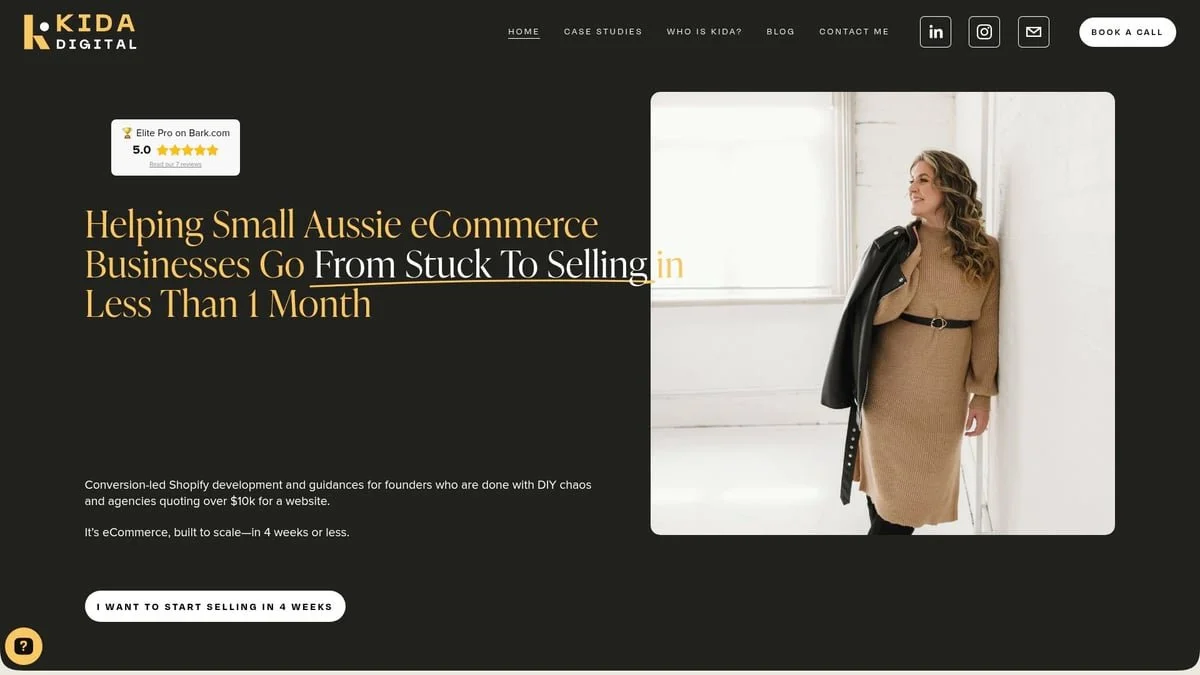
That is where Kida Digital stands out. Their founder-led process delivers custom, conversion-ready Shopify stores in as little as four weeks. You get end-to-end Shopify development, branding, and ongoing support—all tailored for the Australian market.
If you want to avoid DIY pitfalls or generic solutions, working with Shopify expert services in Australia could be the game changer for your business ecommerce goals. Many brands see faster launches, stronger conversions, and lasting growth after partnering with Kida Digital.
Ready to get started? Book your free 30-minute Shopify plan call and see how quickly you can accelerate your business ecommerce journey.
If you’re ready to put these strategies into action and actually see your ecommerce business take shape for 2026, here’s your chance to move from planning to real progress. We know how overwhelming it can feel to get stuck between big promises and confusing DIY platforms. That’s exactly why Kida Digital offers a straightforward path—helping you build a conversion-focused Shopify store that’s scalable and ready for growth. Let’s take the next step together and get your online store up and selling quickly. Go From Stuck to Selling in 4-Weeks
Article written using RankPill.